Skip to content

Heart & Blood Sugar

Heart & Blood Sugar

Focus: Cholesterol, Cardiovascular Risk, Diabetes, Metabolic Risks


Blue_Green_Red_and_Pink_Playful_Creative_Studio_Logo_9
Cholesterin-Status - Probatix Health

Seller: Probatix®

Cholesterol Status

Regular Price 39,00 €
Sales price 39,00 € Regular Price
Men's Health Profile
Premium

Seller: Probatix®

Men's Health Profile

Regular Price 189,00 €
Sales price 189,00 € Regular Price
Women's Health Profile
Premium

Seller: Probatix®

Women's Health Profile

Regular Price 240,00 €
Sales price 240,00 € Regular Price 270,00 €
Cardiovascular Risk Profile
Premium

Seller: Probatix®

Cardiovascular Risk Profile

Regular Price 129,00 €
Sales price 129,00 € Regular Price
Langzeitblutzucker-Test (HbA1c) - Probatix Health

Seller: Probatix®

Long-term Blood Sugar Test (HbA1c)

Regular Price 35,00 €
Sales price 35,00 € Regular Price
Stoffwechsel-Profil - Probatix Health

Seller: Probatix®

Metabolism Profile

Regular Price 69,00 €
Sales price 69,00 € Regular Price
Energie-Status - Probatix Health

Seller: Probatix®

Energy Status

Regular Price 159,00 €
Sales price 159,00 € Regular Price
Nieren-Profil - Probatix Health

Seller: Probatix®

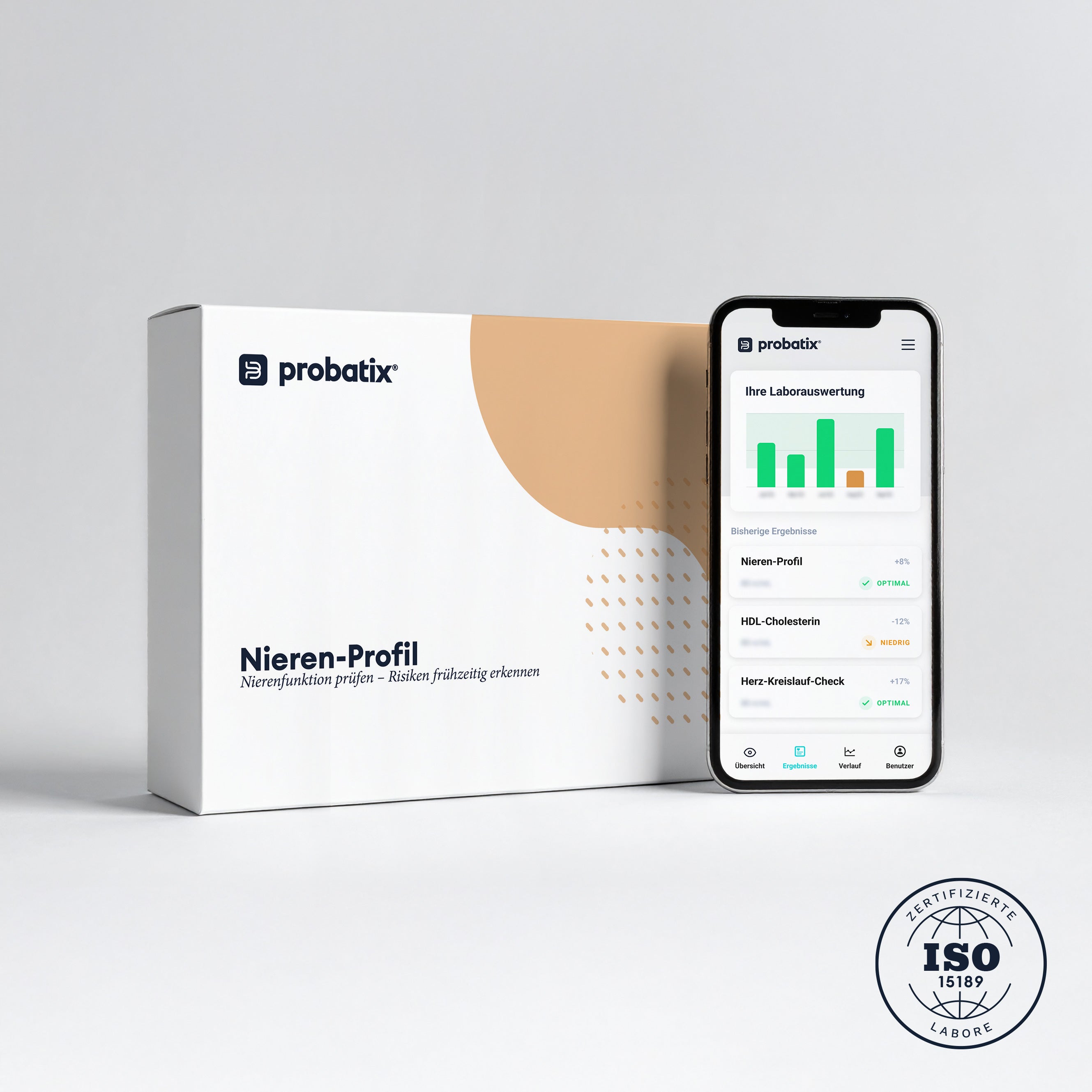
Kidney Profile

Regular Price 69,00 €
Sales price 69,00 € Regular Price
Fitness-Profil - Probatix Health

Seller: Probatix®

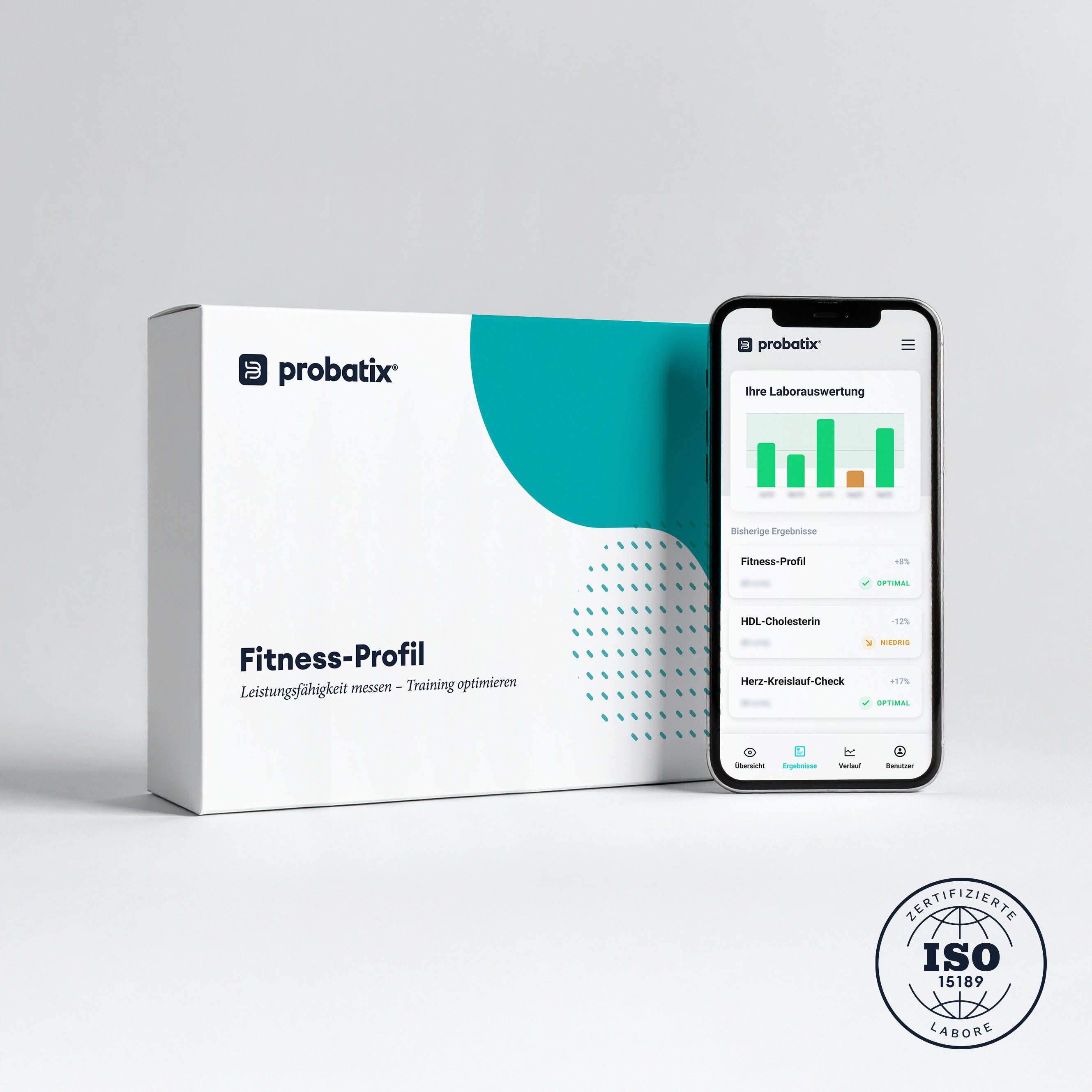
Fitness Profile

Regular Price 139,00 €
Sales price 139,00 € Regular Price
x

Too many tests to choose from?

Our digital health advisor helps you find the right blood test for your symptoms or preventive care.

Blue_Green_Red_and_Pink_Playful_Creative_Studio_Logo_15

Which diseases can be detected in the blood?

Blood values can provide important indications of diseases. These include, for example, inflammations, infections, diabetes, lipid metabolism disorders, hormonal changes, or deficiencies such as iron or vitamin D deficiency.

Which blood tests can be done at home?

With Probatix, you can conveniently determine many relevant blood values at home. These include, among others, vitamin and mineral levels, cholesterol, metabolic markers such as HbA1c, as well as selected hormone levels.

The sample is taken via a finger prick, and the analysis is carried out by a certified specialist laboratory.

Can you test your own blood at home?

Yes, you can collect your blood sample at home yourself. With Probatix, this is done with a simple finger prick. You then send the collected sample to a certified specialist laboratory, where it is analyzed under strict quality standards.

Important: The evaluation does not take place at home, but in the laboratory. It is precisely there that the necessary equipment, controls, and medical standards are available to ensure precise and reliable results.

This way, you combine convenient home collection with the quality of professional laboratory diagnostics.

How do home blood test kits work?

A blood test kit from Probatix works simply: You choose your test, take the sample via finger prick, send it to the lab, and receive your results digitally.

The analysis is conducted in a certified specialist laboratory – clearly prepared and securely accessible.

Can heart problems be detected in the blood?

Certain heart problems can manifest in specific blood values. These include, for example, troponin, CK-MB, or BNP, which can be elevated in acute or chronic heart stress. However, a standard blood test alone is not sufficient to reliably detect heart problems. With targeted laboratory values from Probatix, you can have risk factors such as cholesterol, LDL, HDL, or inflammation markers checked – as an important basis for assessing your cardiovascular risk.

Does one have poor blood values during a heart attack?

In the event of an acute heart attack, certain markers in the blood increase significantly, particularly troponin. This value is considered a central laboratory parameter in the diagnosis of a heart attack. Important: A heart attack is a medical emergency and is always clarified in the hospital. Blood tests from Probatix are not intended for emergency diagnostics but for checking risk factors in advance.

Can a blood test determine if you have diabetes?

Yes, diabetes can be reliably detected through certain blood values. The fasting blood sugar and the HbA1c value, which reflects the average blood sugar of the last two to three months, are particularly important. With a corresponding test from Probatix, you can conveniently have your HbA1c value determined at home. The analysis is carried out in a certified specialist laboratory, and you will receive the results digitally and clearly prepared.

At what values is one diabetic?

Diabetes is generally diagnosed with the following laboratory values: HbA1c from 6.5% (48 mmol/mol) Fasting blood sugar from 126 mg/dl (7.0 mmol/l) Random blood sugar from 200 mg/dl (11.1 mmol/l) with symptoms Values below these thresholds may indicate a so-called prediabetes stage. With a Probatix HbA1c test, you can check early on whether your blood sugar is within the normal range – as a basis for preventive measures or medical clarification.

What does a blood test show for heart and blood sugar?

Metabolism of sugar, cholesterol, inflammation, and organs to better classify. Many ask themselves: What do blood values indicate?, how does a blood test evaluation work, and which blood test values are truly relevant? Especially with complaints such as fatigue, dizziness, heart palpitations, high blood pressure, weight gain, or frequent thirst, lab values can provide important clues. Values such as glucose, HbA1c, cholesterol, triglycerides, kidney values, liver values, and certain heart values are often considered. A normal blood count or complete blood count can provide initial information but does not automatically replace a targeted examination for diabetes, cardiovascular risks, or metabolic disorders.

Can diabetes be seen in a blood test?

Many search for can diabetes be seen in a blood test, diabetes blood test, recognizing diabetes in a blood test, or large blood test diabetes detectable. The clear answer: A classic large blood test does not directly show diabetes. For a diabetes diagnosis, blood sugar levels, fasting blood sugar, HbA1c, and sometimes an oral glucose tolerance test are important. Relevant terms are therefore blood values in diabetes, diabetes blood values large blood test, diabetes detectable in blood, diabetes diagnosis blood test, diabetes type-2 blood values, which blood value in diabetes, blood values glucose, glucose blood, glucose in plasma, glucose values elevated, glucose too high, or glucose level too high. Those who want to be tested for diabetes should specifically ask for a test for diabetes, diabetes test at the doctor, sugar test at the doctor, or an examination for diabetes.

What do blood sugar, glucose, and HbA1c mean?

Blood sugar indicates how much glucose is currently present in the blood. The HbA1c value, on the other hand, shows the average blood sugar of the past weeks. Therefore, many search for blood sugar, blood sugar value, sugar value blood count, elevated sugar value, high blood sugar, elevated blood sugar levels, blood sugar levels too high, what to do with elevated sugar levels, or which sugar value is dangerous. The HbA1c is particularly important when it comes to diabetes, prediabetes, or long-term blood sugar control. Frequently searched are blood values HbA1c, blood count HbA1c, blood values HbA1c meaning, what does HbA1c mean in the blood count, normal HbA1c value, HbA1c value normal range, HbA1c value standard range, NGSP value, prediabetes HbA1c, HbA1c prediabetes, prediabetes values, and prediabetes values fasting.

What is prediabetes and can it be improved?

Prediabetes means that blood sugar levels are already noticeable but not yet clearly in the range of diabetes. Many search for what does prediabetes mean, prediabetes definition, prediabetes symptoms women, fasting blood sugar mmol/l, elevated fasting blood sugar in healthy individuals, or slightly elevated fasting blood sugar. Whether prediabetes is curable depends heavily on the cause, weight, diet, exercise, and other risk factors. Therefore, search queries like can prediabetes be cured, is prediabetes curable, lower blood sugar levels, lower blood sugar, blood sugar regulation, regulation of blood sugar, regulation of blood sugar levels, keep blood sugar levels constant, and blood sugar regulation diabetes are particularly common. A blood test can help to know the baseline values and better control changes later.

What is insulin resistance and how can it be tested?

In insulin resistance, body cells respond poorly to insulin. As a result, blood sugar levels can rise in the long term, even though the body initially produces more insulin. Many search for what is insulin resistance, what does insulin resistance mean, what is insulin resistant, insulin resistance symptom, test insulin resistance, insulin resistant test, test insulin resistance, diagnostics insulin resistance, determine insulin resistance, insulin resistance diagnosis, insulin too high or insulin level too high. Questions like is insulin resistance curable, natural insulin, blood sugar regulation feedback loop, blood sugar regulation feedback loop, or lock-and-key principle insulin show that many want to understand how insulin and blood sugar are related. A blood test can provide important insights here, especially in combination with fasting blood sugar, HbA1c, and other metabolic values.

Which heart values can be tested in the blood?

In case of heart complaints or for prevention, certain blood values can provide indications of heart strain, heart attack risk, or heart failure. Frequently searched terms include heart blood values, blood values heart attack, blood count heart values, complete blood count heart values, which blood values for heart, elevated heart values in blood, heart attack value, or blood values heart rhythm disorders. An important laboratory value when heart failure is suspected is NT-proBNP. Therefore, many search for NT-proBNP table, BNP value table, NT-proBNP values table, NT-proBNP normal values, how high can the NT pro BNP value be, Pro-BNP normal value, which proBNP value is normal, elevated NT-proBNP value, NT proBNP over 4000, or how to lower the BNP value. However, in case of acute symptoms such as chest pain, shortness of breath, or severe pressure in the chest, one should not wait for a normal blood test but seek medical help immediately.

Which blood values are important for cholesterol, triglycerides, and heart attack risk?

For cardiovascular risk, blood lipids are particularly important. These include cholesterol, LDL, HDL, triglycerides, and lipoprotein(a). Many search for cholesterol blood levels, sugar cholesterol, sugar and cholesterol, normal cholesterol level man, triglycerides, triglycerides too high, triglyceride levels, triglyceride value, triglycerides elevated, high triglycerides, lower triglycerides, naturally lower triglycerides, or triglycerides too low. Lipoprotein(a) is also becoming increasingly important because an elevated level can be genetically determined and influence the risk of heart attack. Keywords such as Lipo A, lipoprotein level, elevated lipoproteins, lipid A level, cause of lipoprotein A elevation, lipoprotein A symptoms, and naturally lower lipoprotein A fit here. Especially with a family history, high blood pressure, or diabetes, it can be useful to check these values early.

What symptoms may indicate heart problems or atrial fibrillation?

Heart problems can manifest in very different ways. Some feel pressure in the chest, shortness of breath, or reduced performance, while others experience palpitations, rapid heartbeat, or fluttering in the chest. Common search queries include heart circulation problems, diseases of the cardiovascular system, palpitations after eating thyroid, thyroid heart, high pulse normal blood pressure thyroid, or fluttering in the chest thyroid. In cases of atrial fibrillation, many search for symptoms of atrial fibrillation, recognizing atrial fibrillation, is atrial fibrillation dangerous, causes of atrial fibrillation, signs of atrial fibrillation, what does atrial fibrillation feel like, AF symptoms, heart vibrating, heart fluttering, or psychological causes of heart fluttering. A blood test alone does not reliably detect atrial fibrillation but can help assess accompanying factors such as thyroid, electrolytes, inflammation, or heart strain.
Einfach Testen ohne Arztbesuch
Präzise Analyse im Fachlabor
Digital Ergebnisse aufs Handy
Einfach Testen ohne Arztbesuch
Präzise Analyse im Fachlabor
Digital Ergebnisse aufs Handy
Fundiert Direkt mit der Ärztin besprechen