Our customer reviews
Unsure about the selection?

More products




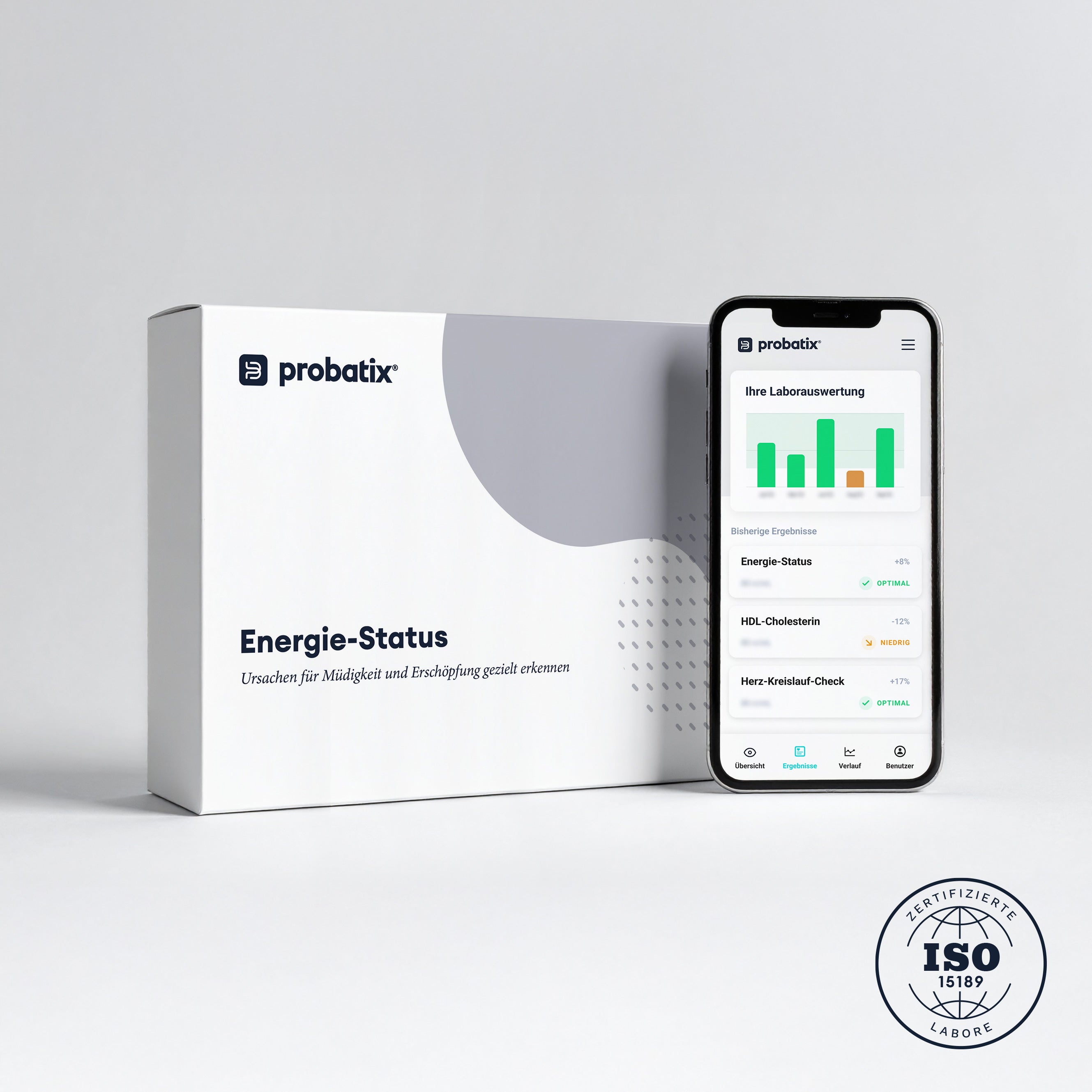
















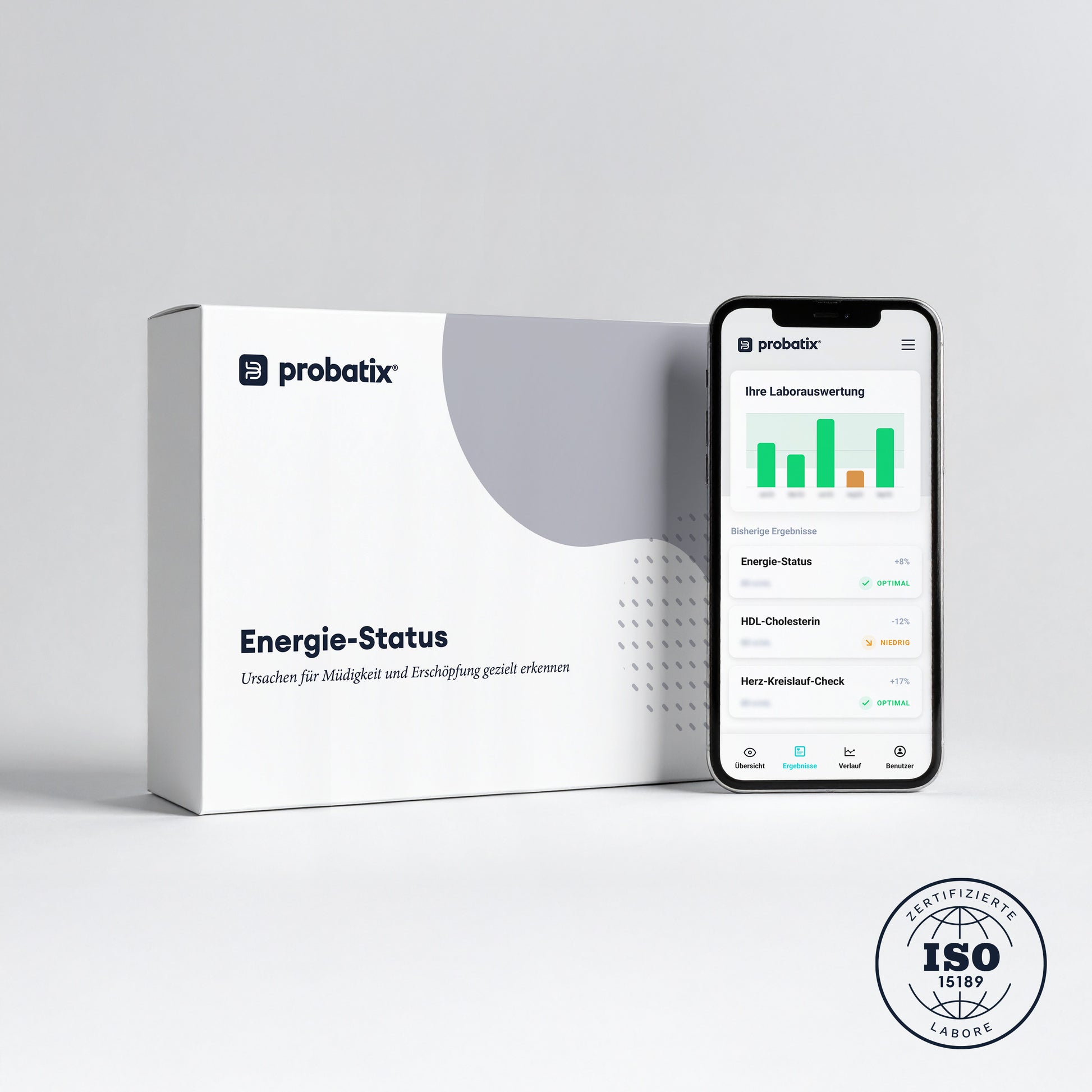
Energy Status: All details about the test
What benefits does this test offer me?
What benefits does this test offer me?
Are you constantly tired, lacking drive, or feeling exhausted despite getting enough sleep? The Energy Status helps you identify the reasons for your fatigue and take targeted action against it.
What you gain:
- A clear understanding of the causes of your fatigue and exhaustion.
- Insight into your nutrient status (Vitamin D, B12, Ferritin), your thyroid values (TSH, fT3, fT4), as well as liver and kidney values (GGT, GPT, Bilirubin, Cystatin C).
- Concrete results that help you take targeted measures to regain energy and quality of life.
Why this test is so important:
Fatigue is often a signal that your body needs support – whether through better nutrient supply, a balanced hormone level, or the reduction of silent inflammations.The Energy Status makes these connections visible and helps you actively improve your health.
Rediscover your energy – simple, safe, and fast.
What do the measured values mean?
What do the measured values mean?
25-OH vitamin D is the storage form of vitamin D that the body produces in the liver from vitamin D formed by sunlight or food. Vitamin D supports calcium absorption, ensures healthy bones and teeth, and plays an important role for muscles, nerves, and the immune system.
The 25-OH vitamin D test is the best method to check vitamin D status. Low levels can indicate too little sunlight, an unbalanced diet, or diseases and are associated with bone diseases such as osteoporosis or rickets. Excessive levels usually result from too high supplement doses and can strain the kidneys and liver.
Vitamin B12
Vitamin B12 is an essential vitamin needed for the formation of red blood cells, the function of the nervous system, and the production of DNA. It is found almost exclusively in animal foods such as meat, fish, eggs, and dairy products.
A deficiency in Vitamin B12 can lead to anemia, fatigue, concentration problems, and nerve damage. Those at increased risk for a deficiency include older adults, vegetarians, vegans, or individuals with absorption disorders in the intestine.
Bilirubin, total
Bilirubin is produced during the breakdown of the red blood pigment hemoglobin and is further processed in the liver. It enters the intestine via the bile and is eventually excreted. The total bilirubin level in the blood indicates how well this breakdown and excretion process is functioning.
Slightly elevated levels can be harmless, such as in the case of Gilbert's syndrome. However, significantly elevated levels can indicate liver or bile duct diseases and often lead to a yellowing of the skin and eyes (jaundice).
CRP high-sensitive (hs-CRP)
Das hochsensitive CRP misst denselben Entzündungsmarker wie das klassische CRP, erfasst aber auch sehr niedrige Konzentrationen — und macht damit "stille" Entzündungen sichtbar, die keine spürbaren Beschwerden verursachen.
Dauerhaft leicht erhöhte Werte zeigen eine chronische Entzündungsaktivität an, wie sie bei Übergewicht, Bewegungsmangel, Rauchen oder anhaltendem Stress entsteht, und gehen mit einem erhöhten Risiko für Herzinfarkt und Schlaganfall einher. Der Wert ergänzt damit die Blutfette bei der Einschätzung des Herz-Kreislauf-Risikos und eignet sich, um den Effekt von Lebensstiländerungen zu verfolgen. Bei akuten Infekten ist er vorübergehend nicht aussagekräftig.
Cystatin C
Cystatin C is a protein that is produced in all body cells and filtered from the blood by the kidneys. Since the production of Cystatin C in the body is relatively constant, the value is well-suited for assessing kidney function.
In contrast to creatinine, Cystatin C increases early when kidney performance declines. Therefore, it is considered a sensitive marker for detecting early kidney weakness in a timely manner.
Ferritin
Ferritin is a protein that stores iron in the body and releases it when needed. The ferritin level in the blood indicates how well the body's iron stores are filled and is therefore often used to assess iron status.
Low values usually indicate an iron deficiency or anemia. Elevated values may suggest inflammation, liver diseases, or iron overload.
Sodium
Sodium is an important mineral and electrolyte that regulates the body's water and salt balance. It also plays a central role in nerve signal transmission and muscle function. The body usually maintains sodium levels within a narrow range to keep essential functions stable.
High levels (hypernatremia) often occur with fluid deficiency and can trigger thirst, confusion, or seizures. Low levels (hyponatremia) arise, for example, from significant fluid loss, kidney problems, or certain medications and lead to weakness, headaches, and in extreme cases, consciousness disorders.
fT4 (free thyroxine)
fT4 is the precursor of the active hormone T3 and is predominantly produced by the thyroid gland. It circulates in the blood and can be converted into T3 in the organs to stimulate metabolism.
High fT4 levels typically indicate hyperthyroidism. Low levels, on the other hand, suggest hypothyroidism.
TSH
TSH (Thyroid-stimulating hormone) is produced in the pituitary gland and controls the activity of the thyroid gland. It stimulates the thyroid to produce the hormones T3 and T4, which influence metabolism and many body functions.
High TSH levels usually indicate an underactive thyroid, as the body tries to boost hormone production. Low TSH levels, on the other hand, suggest an overactive thyroid.
fT3 (free triiodothyronine)
fT3 is the active form of the thyroid hormone that acts directly in the cells and regulates metabolism. It influences heart rate, energy consumption, digestion, and many other body functions. A large part is produced by the conversion of the hormone T4 into T3 in the liver and kidneys.
Elevated fT3 levels usually indicate hyperthyroidism, while low levels may suggest hypothyroidism or a disturbance in the conversion of T4 to T3.
Why is this test important?
Why is this test important?
When should I take this test?
When should I take this test?
If fatigue determines your everyday life.
- Frequently feeling tired and drained without an apparent cause.
- Feeling like you never really recover despite getting enough sleep.
- Noticing persistent concentration problems or lack of energy.
- Wanting to clarify whether nutrient deficiencies, hormonal imbalances, or stress are behind it.
- Proactively checking your health to remain productive in the long term.
Where can I find the instructions?
Where can I find the instructions?
Bei Fragen hilft Ihnen auch immer gerne unser wunderbarer Support weiter: support@probatix.de
FAQ - More Frequently Asked Questions about the Test
FAQ - More Frequently Asked Questions about the Test
What is examined in the Energy Status?
The test analyzes important blood values such as Vitamin D, Vitamin B12, Ferritin, Bilirubin, Sodium, fT3, fT4, TSH, as well as liver (GGT, GPT), kidney (Cystatin C), and inflammation markers (CRP). This helps identify possible causes of persistent fatigue and exhaustion.
Who is this test suitable for?
The Energy Status is ideal for anyone who often feels tired, listless, or exhausted and wants to better understand the reasons for it – whether due to nutrient deficiencies, hormonal imbalances, or organ stress.
How does the sampling work?
The sampling is conveniently done from home with a capillary blood test from the fingertip. You will receive a test kit with detailed instructions for easy execution.
How long does it take to receive my results?
After sending the sample to our specialized laboratory, your results are usually available digitally on the dashboard within 3–5 business days.
What can I infer from the results?
The results indicate whether there are nutrient deficiencies, hormonal imbalances, or other stressors that could explain your fatigue – and provide guidance on how to counteract them effectively.
What happens if my values are outside the reference range?
If your values are abnormal, you should discuss the results with a doctor. They can initiate further examinations and recommend appropriate measures.
Can fatigue be caused by nutrient or hormone deficiencies?
Yes, particularly deficiencies in Vitamin D, Vitamin B12, or iron (ferritin), as well as thyroid disorders, are common causes of fatigue.The test helps to detect these at an early stage.
How reliable are the results?
The analysis is carried out in a certified specialist laboratory according to the highest medical standards – precise and reliable.

Can I have a blood test without a general practitioner?
Yes, certain laboratory tests can now be conducted without a direct appointment with your general practitioner through validated home tests. You take a small blood sample at home and have it analyzed in a medical laboratory. This way, you can keep an eye on important health values.

How reliable are at-home blood tests?
The crucial factor is that the analysis is conducted in a quality-assured laboratory using standardized methods. Then, blood tests with capillary blood are generally just as reliable as a blood draw in the practice. With clear instructions and certified partner laboratories, Probatix ensures that you can rely on your results.

Why should I take a test with Probatix instead of at the doctor's?
At Probatix, you can start blood tests flexibly at home - without waiting rooms, with clear step-by-step instructions and analysis in certified specialist laboratories. The results are prepared digitally, comprehensibly, and trackably, so you can easily monitor developments over time. This way, you can complement traditional medical care with comfortable, data-supported monitoring of your health with Probatix.