1. Take sample
2. Send to lab
3. Receive result
Bei Fragen hilft Ihnen auch immer gerne unser Support weiter: support@probatix.de
Our customer reviews
Unsure about the selection?

More products





















Can I have a blood test without a general practitioner?
Yes, certain laboratory tests can now be conducted without a direct appointment with your general practitioner through validated home tests. You take a small blood sample at home and have it analyzed in a medical laboratory. This way, you can keep an eye on important health metrics.

How reliable are at-home blood tests?
The crucial factor is that the analysis is conducted in a quality-assured laboratory using standardized methods. Then, blood tests with capillary blood are generally just as reliable as a blood draw in the practice. With clear instructions and certified partner laboratories, Probatix ensures that you can rely on your results.

Why should I take a test with Probatix instead of at the doctor's?
At Probatix, you can start blood tests flexibly at home - without waiting rooms, with clear step-by-step instructions and analysis in certified specialist laboratories. The results are prepared digitally, comprehensibly, and trackably, so you can easily monitor developments over time. This way, you can complement traditional medical care with comfortable, data-supported monitoring of your health with Probatix.
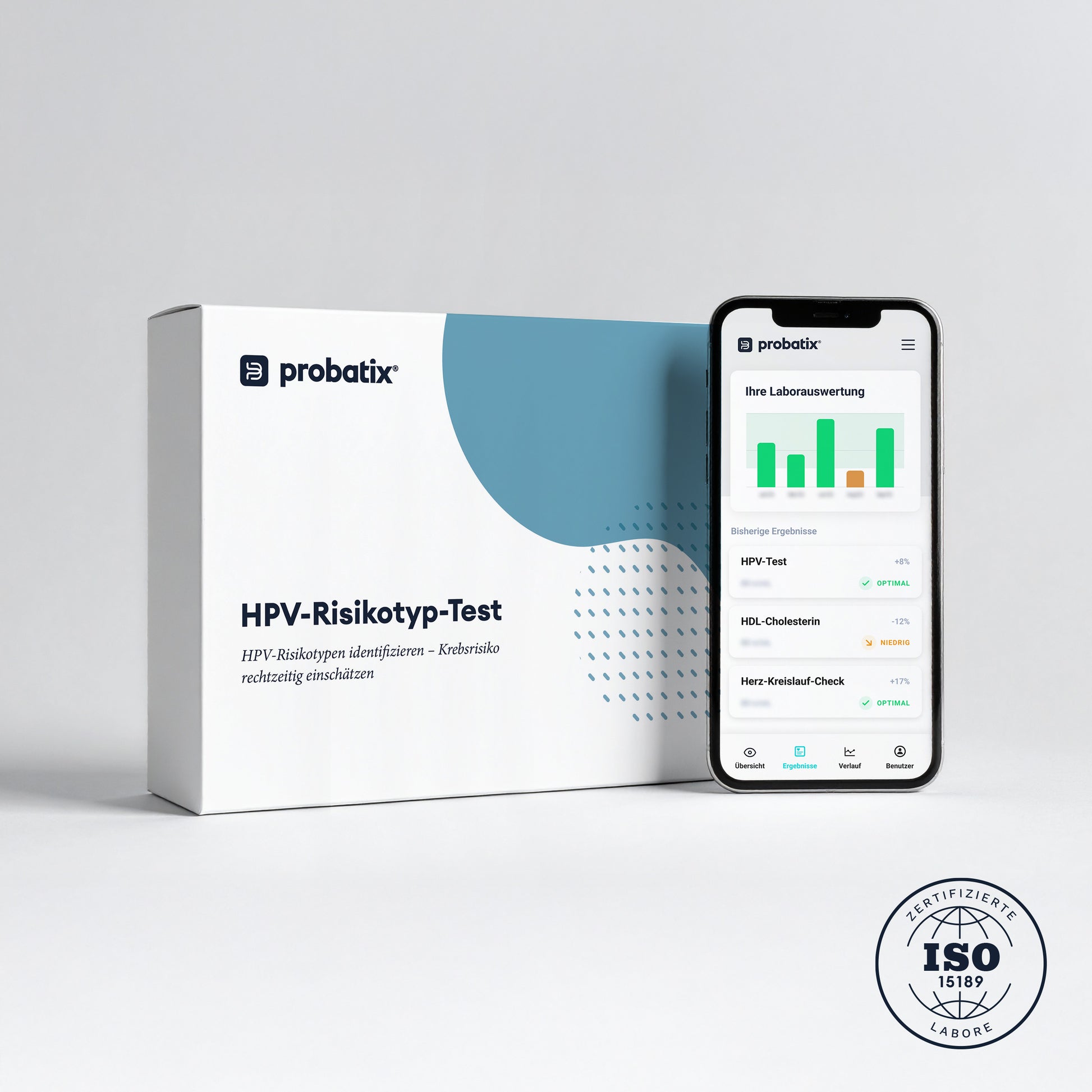
HPV Risk Type Test: All details about the test
What benefits does this test offer me?
What benefits does this test offer me?
Human papillomaviruses (HPV) are among the most common sexually transmitted infections worldwide. Most people become infected with HPV during their lifetime—often without noticing it. While many infections are harmless and are fought off by the body itself, certain high-risk HPV types can increase the risk of cancers, particularly cervical cancer, anal cancer, and throat cancer, .
With the HPV test, you can detect early on whether you are infected with high-risk HPV types. Since most HPV infections are asymptomatic, regular screening is particularly important to detect possible cell changes in time and take medical action.
Why an HPV test is important
HPV is transmitted through direct skin contact, especially during sexual intercourse.Most infections heal on their own, but in some cases, the viruses can remain in the body for years and affect cell growth. Early detection enables targeted prevention and precautionary measures.
Some of the main reasons for regular HPV testing are:
- Early detection: High-risk HPV types can cause long-term cellular changes. Early diagnosis allows for targeted medical monitoring.
- Cancer prevention: HPV is the main cause of cervical cancer and can also cause other types of cancer, such as anal cancer or throat cancer.
- No symptoms: Most HPV infections go unnoticed, which is why regular testing is crucial.
- Simple testing method: With a simple urine sample, you can conveniently and discreetly test for HPV.
Which HPV types are tested?
The test checks for the presence of high-risk HPV types, that are associated with the development of cancers. These include, among others:
- HPV 16 & 18: The most common high-risk types, responsible for about 70% of cervical cancer cases.
- HPV 31, 33, 45, 52, 58: Other high-risk types also associated with cancers.
How does the test work?
The process is simple, discreet, and convenient from home:
- You collect a urine sample using the provided test kit.
- The sample is securely packaged and sent to our certified laboratory.
- Within a few days, you will receive your results digitally.
Symptoms for which you should take this test
The HPV test is particularly useful if you notice one or more of the following symptoms or have an increased risk of infection:
- Unexplained genital warts or skin changes in the intimate area.
- Chronic inflammation or pain in the genital or anal area.
- Irregular bleeding outside the menstrual cycle (in women).
- Frequent infections in the intimate area.
- A weakened immune system, that makes infections more difficult to subside.
- Multiple sexual partners or a change of sexual partner.
What happens after the test?
Based on your results, you will receive a clear assessment:
- Negative result: No high-risk HPV types were detected, indicating a low risk for HPV-related changes.
- Positive result: High-risk HPV was detected. This does not necessarily mean that there are cell changes or cancer, but a medical check-up is recommended.
Regular tests for long-term safety
HPV can remain in the body for years without causing symptoms. Regular testing helps to detect infections early and take medical action if necessary.
What do the measured values mean?
What do the measured values mean?
HPV often goes unnoticed as no direct symptoms occur. The test makes such infections visible and provides clarity about one's own health status.
Early detection of cell changes
Many HPV infections initially occur without symptoms but can cause changes in the long term. Early detection helps to initiate appropriate measures in a timely manner.
HPV 16 & 18
These two HPV types are responsible for the majority of HPV-related cancers. Detection allows for targeted medical clarification and monitoring.
Additional high-risk types
In addition to HPV 16 and 18, there are other types associated with cellular changes. The test takes these into account to provide a comprehensive risk profile.
HPV-DNA Detection
The test detects genetic material (DNA) of HPV and indicates whether a current infection is present. This allows even unnoticed infections to be reliably detected.
High-risk HPV types
Certain HPV types are associated with an increased risk of cell changes and cancers. The test specifically detects these high-risk types to enable early assessment.
Why is this test important?
Why is this test important?
When should I take this test?
When should I take this test?
- If you are sexually active and want to know your HPV risk.
- If you engage in regular cervical cancer screening.
- If you have or have had multiple sexual partners.
- If you notice unexplained genital warts or other HPV symptoms.
- If you are over 30 years old and want to know if you carry high-risk HPV types.
HPV can remain unnoticed – regular testing helps to identify potential risks early.
Why test with Tasso+?
Why test with Tasso+?
Where can I find the instructions?
Where can I find the instructions?
Bei Fragen hilft Ihnen auch immer gerne unser wunderbarer Support weiter: support@probatix.de
FAQ - More Frequently Asked Questions about the Test
FAQ - More Frequently Asked Questions about the Test
What is examined in the HPV test?
The test checks your vaginal swab sample for the presence of high-risk HPV types, that can increase the risk of cancers such as cervical cancer, anal cancer, or throat cancer.
Who is this test suitable for?
The test is ideal for sexually active individuals, especially for women for early detection of cervical cancer and for anyone who wants to know their HPV risk.
How does the sampling work?
The sampling is simple and painless via a vaginal swab. The test kit contains all necessary materials and a detailed guide for safe home use.
How long does it take to receive my results?
After sending in the sample, you will typically receive your lab results digitally within 3–5 business days.
What does a positive test result mean?
A positive result means that high-risk HPV types have been detected. However, this does not necessarily mean that cancer will develop. Further examinations by a doctor are recommended.
What does a negative test result mean?
A negative result means that no high-risk HPV types have been detected, indicating a low risk for HPV-related changes.
Why is HPV early detection important?
Many HPV infections are asymptomatic and disappear on their own. However, certain high-risk types can cause long-term cell changes that may develop into cancer. Early detection allows for timely preventive measures.