Our customer reviews
Unsure about the selection?

More products



















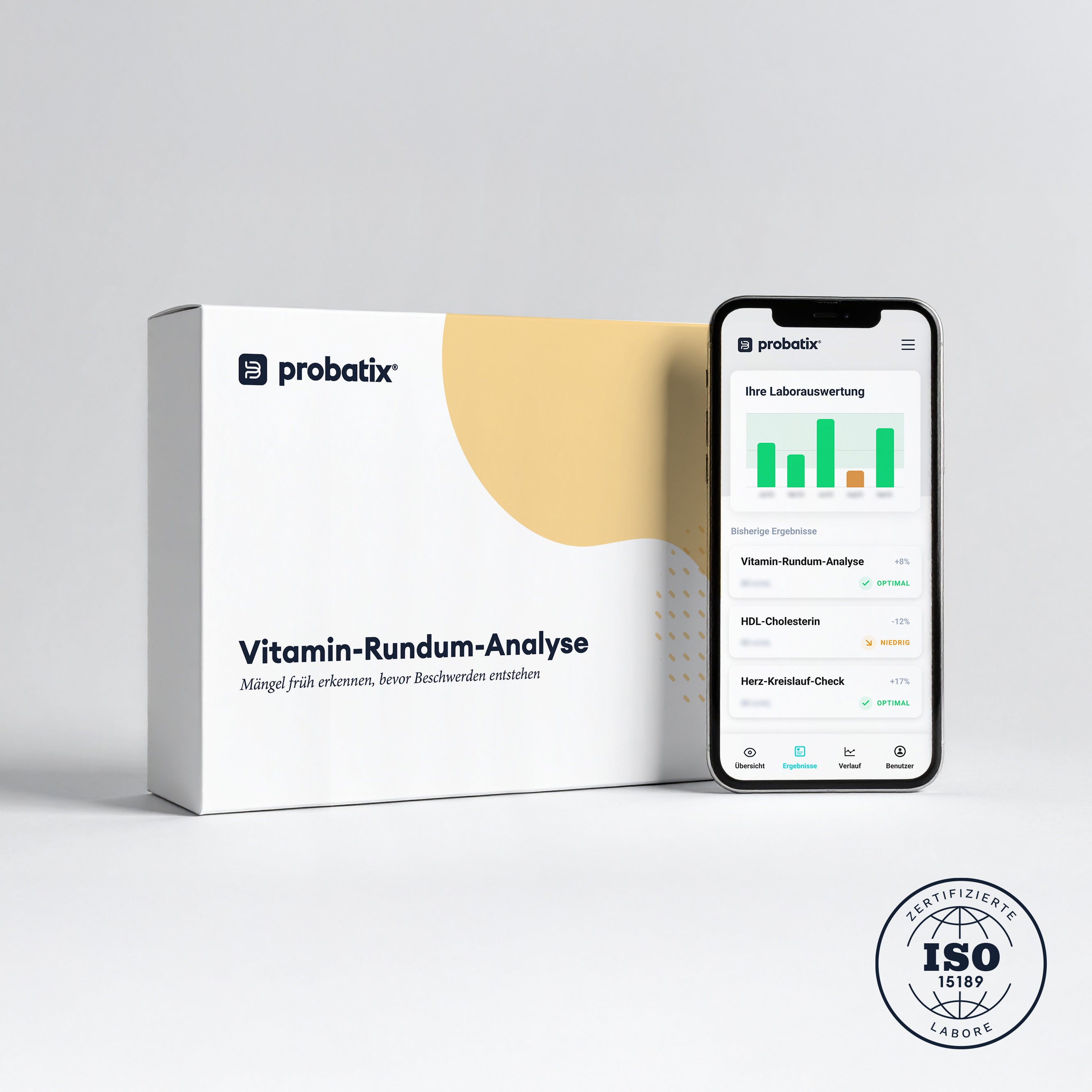

Vitamin Comprehensive Analysis: All details about the test
What benefits does this test offer me?
What benefits does this test offer me?
Your vitamin status at a glance – for more energy and well-being.
The Comprehensive Vitamin Analysis examines the most important vitamins in your blood, including Vitamin D, Vitamin B12, and other essential nutrients. This gives you a clear overview of your supply and allows you to detect deficiencies early.
Why test now? A balanced vitamin status is crucial for energy, immune defense, and overall health. Deficiencies often go unnoticed for a long time and can significantly impair your quality of life.
Your benefits:
- Comprehensive analysis: Measurement of the most important vitamins for your health.
- Simple & convenient: Sample collection flexibly and discreetly from home.
- Clear feedback: Your individual report shows your values compared to the reference ranges.
Optimize your health – with the comprehensive vitamin analysis from Probatix.
What do the measured values mean?
What do the measured values mean?
Thiamine, also known as Vitamin B1, is essential for energy metabolism and the function of nerves and muscles. A deficiency in thiamine can lead to neurological disorders and cardiovascular problems, while elevated levels are usually due to supplementation.
Transcobalamin
Transcobalamin is a protein that transports vitamin B12 in the blood and makes it available to the cells. A deficiency or dysfunction can lead to reduced vitamin B12 supply to the cells, which can cause various health problems.
Pyridoxal phosphate (PLP)
Pyridoxal phosphate is the active form of Vitamin B6 and plays an important role in amino acid metabolism and nervous system function. A deficiency can cause neurological problems and metabolic disorders.
25-OH-Vitamin-D3
25-OH vitamin D is the storage form of vitamin D that the body produces in the liver from vitamin D formed by sunlight or food. Vitamin D supports calcium absorption, ensures healthy bones and teeth, and plays an important role for muscles, nerves, and the immune system.
The 25-OH vitamin D test is the best method to check vitamin D status. Low levels can indicate too little sunlight, an unbalanced diet, or diseases and are associated with bone diseases such as osteoporosis or rickets. Excessive levels usually result from too high supplement doses and can strain the kidneys and liver.
Why is this test important?
Why is this test important?
When should I take this test?
When should I take this test?
A comprehensive vitamin check can be useful in the following situations:
- In cases of chronic fatigue or exhaustion
- With an unbalanced or restrictive diet
- With increased needs due to stress, sports, or pregnancy
- With frequent infections or a weakened immune system
- With skin, hair, or nail problems
- As part of comprehensive health care
- If vitamin deficiency is suspected due to symptoms or risk factors
For an accurate interpretation of the results and individual recommendations, please consult a doctor.
Where can I find the instructions?
Where can I find the instructions?
Bei Fragen hilft Ihnen auch immer gerne unser wunderbarer Support weiter: support@probatix.de
FAQ - More Frequently Asked Questions about the Test
FAQ - More Frequently Asked Questions about the Test
1. What does the Vitamin Comprehensive Analysis measure?
The Vitamin Comprehensive Analysis checks the concentration of important vitamins such as Vitamin D, B12, folic acid, and other essential vital substances that are crucial for health, energy, and well-being.
2. Who is the Vitamin Comprehensive Analysis suitable for?
The test is suitable for anyone who wants to ensure they are optimally supplied with the most important vitamins – especially if experiencing symptoms like fatigue, a weak immune system, or suspected nutrient deficiency.
3. Why are vitamins like Vitamin D and B12 important?
Vitamin D supports bone stability and the immune system, while Vitamin B12 is essential for blood formation, energy metabolism, and nerve function. A deficiency can lead to serious health problems.
4.How is the comprehensive vitamin analysis conducted?
The analysis is performed using a small blood sample that you can easily collect at home. Your sample is then professionally evaluated in a specialized laboratory.
5. What to do if a deficiency is detected?
If a deficiency is present, you can restore your levels by making targeted dietary changes or using supplements. In case of significant deviations, it is advisable to consult a doctor.
6. How long does it take to receive my results?
Typically, the results are available within a few days in your personal Probatix dashboard.
7. How often should I conduct the comprehensive vitamin analysis?
Regular monitoring is advisable, especially with a vegetarian or vegan diet, increased stress levels, or recurring symptoms of vitamin deficiency.

Can I have a blood test without a general practitioner?
Yes, certain laboratory tests can now be conducted without a direct appointment with your general practitioner through validated home tests. You take a small blood sample at home and have it analyzed in a medical laboratory. This way, you can keep an eye on important health values.

How reliable are at-home blood tests?
The crucial factor is that the analysis is conducted in a quality-assured laboratory using standardized methods. Then, blood tests with capillary blood are generally just as reliable as a blood draw in the practice. With clear instructions and certified partner laboratories, Probatix ensures that you can rely on your results.

Why should I take a test with Probatix instead of at the doctor's?
At Probatix, you can start blood tests flexibly at home - without waiting rooms, with clear step-by-step instructions and analysis in certified specialist laboratories. The results are prepared digitally, comprehensibly, and trackably, so you can easily monitor developments over time. This way, you can complement traditional medical care with comfortable, data-supported monitoring of your health with Probatix.