Our customer reviews
Unsure about the selection?

More products
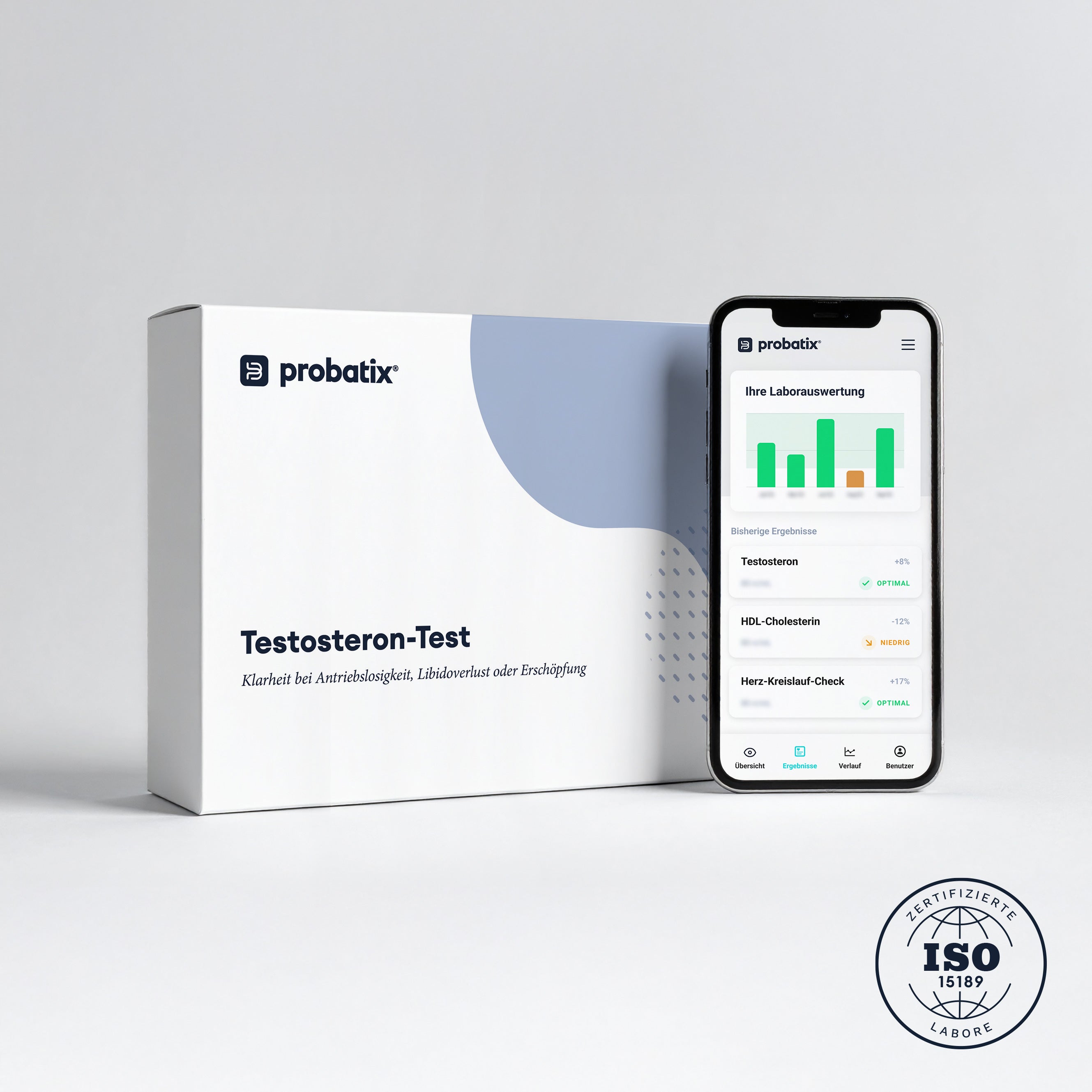

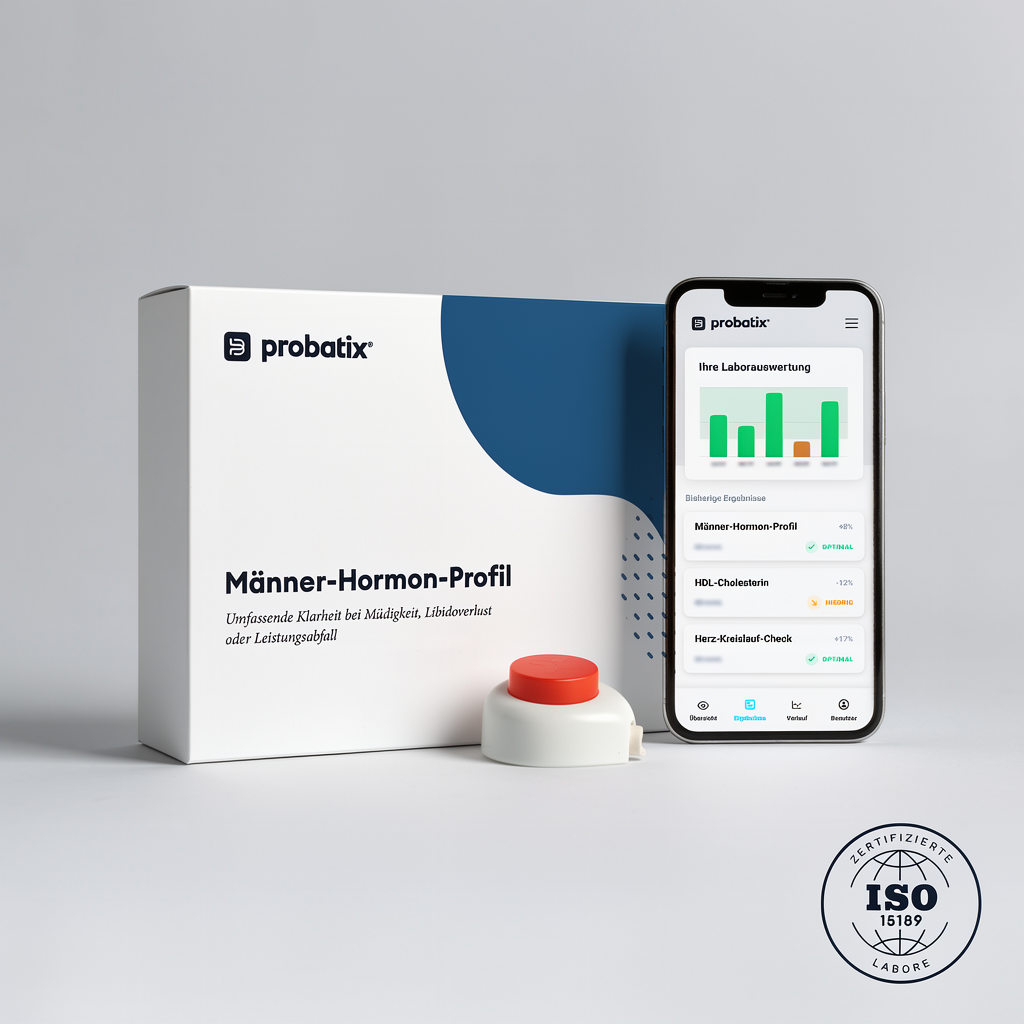



















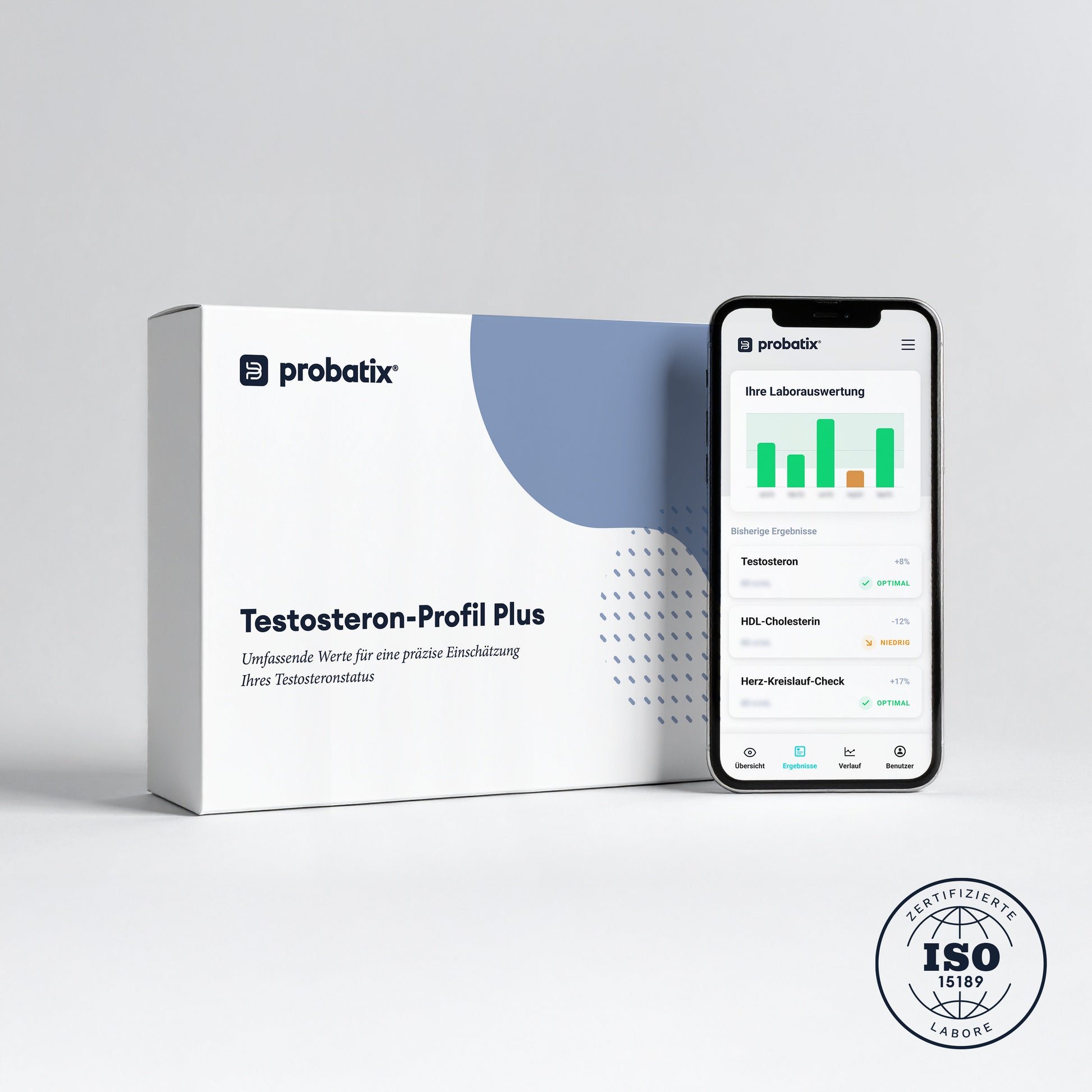
Testosterone Profile Plus: All details about the test
What benefits does this test offer me?
What benefits does this test offer me?
Boost Your Energy, Strength, and Quality of Life
The Testosterone Profile Plus not only analyzes your testosterone levels but also accompanying markers such as SHBG, Albumin, and Prolactin. Together, these values provide a comprehensive picture of your hormonal health and show how your body regulates energy, muscle strength, libido, and mood.
Why now? Hormonal changes often develop gradually and go unnoticed for a long time. An unbalanced testosterone level can cause fatigue, decreased performance, weight gain, or loss of libido. At the same time, SHBG and Albumin, influence how much testosterone is actually available to your body, while Prolactin , when elevated, can negatively affect drive, libido, and mood. Only the interplay of these values gives you a complete picture.
Without these insights, you risk overlooking important signals from your body – unnecessarily affecting your energy and quality of life.
Your Benefits:
- Holistic Analysis: Determination of total and free testosterone, SHBG, albumin, and prolactin.
- Early Clarity: Detects hormonal imbalances before symptoms limit your performance.
- Simple and Flexible: Sampling conveniently from home, professional evaluation in a specialized laboratory.
- Clear Feedback: Individual report with comparison to reference values and easy-to-understand explanations.
Balance your hormones – for more energy, vitality, and long-term health.
What do the measured values mean?
What do the measured values mean?
Testosterone is the most important male sex hormone, predominantly produced in the testes and in smaller amounts in the ovaries and adrenal glands. It promotes the development of male sexual characteristics, muscle and bone growth, as well as the formation of red blood cells. In women, testosterone also plays a role in energy, mood, and libido.
Too low levels can lead to fatigue, lack of drive, reduced libido, and muscle loss in men. Too high levels are less common but can occur with hormone-producing tumors or through the intake of steroids.
Sex hormone-binding globulin (SHBG)
SHBG (Sex hormone-binding globulin) is a protein produced in the liver that binds sex hormones such as testosterone and estrogen in the blood. This regulates how much of these hormones are free and thus biologically active.
High SHBG levels mean that less free testosterone or estrogen is available, which can occur in liver diseases or overactive thyroid conditions. Low levels lead to more free hormone and occur, for example, in cases of obesity, diabetes, or underactive thyroid conditions.
Prolactin
Prolactin is a hormone produced in the pituitary gland. It plays a crucial role in the development of mammary glands and milk production after birth. Even outside of pregnancy and breastfeeding, prolactin can be detected in the blood.
Elevated prolactin levels can lead to menstrual cycle disorders, infertility, or milk flow without pregnancy. In men, elevated levels often manifest as potency disorders or reduced sexual drive. Low levels are rare and usually of little significance.
Albumin
Albumin is the most common protein in blood plasma and is produced in the liver. It retains fluid in the vascular system and transports vitamins, enzymes, and hormones.
A deficiency may be caused by liver or kidney diseases, inflammation, or poor protein supply. High albumin levels occur with fluid loss or a very high-protein diet. Since albumin also reflects the nutritional situation, persistently low levels indicate insufficient protein intake and an increased risk of muscle weakness or infections.
Testosterone, free (calculated)
Free testosterone is the portion of the hormone that is not bound to proteins such as SHBG or albumin and can thus become directly effective in the body. It constitutes only a small fraction of the total testosterone but is crucial for biological effects, such as on muscle strength, bone stability, sexual function, and mood.
If SHBG is significantly increased or decreased, the total testosterone value can give a misleading picture. In such cases, free testosterone is calculated to better assess whether there is indeed a hormone deficiency or excess.
Why is this test important?
Why is this test important?
When should I take this test?
When should I take this test?
- html
- If you often feel tired or exhausted despite getting enough sleep.
- In case of loss of libido or declining sexual performance.
- If you notice unexplained muscle loss or loss of strength.
- In case of mood swings, irritability, or concentration problems.
- If you want to check your hormone levels and actively monitor your health.
Important: For accurate interpretation of the results and individual recommendations, please consult a doctor.
Where can I find the instructions?
Where can I find the instructions?
Bei Fragen hilft Ihnen auch immer gerne unser wunderbarer Support weiter: support@probatix.de
FAQ - More Frequently Asked Questions about the Test
FAQ - More Frequently Asked Questions about the Test
1. What does the Testosterone Profile Plus measure?
The Testosterone Profile Plus determines the total testosterone level, the free (calculated) testosterone, as well as the values for SHBG, albumin, and prolactin. This provides you with a comprehensive picture of your hormone status.
2. Who is the Testosterone Profile Plus suitable for?
The test is suitable for men who want to check their hormone levels in detail – especially in cases of symptoms such as fatigue, loss of libido, muscle loss, or mood swings.
3. Why are SHBG, albumin, and prolactin important?
SHBG and albumin determine how much testosterone is freely available in the body. Prolactin can influence testosterone levels when elevated and negatively affect libido, energy, and mood.
4.What symptoms indicate a hormonal imbalance?
Typical signs include loss of libido, erectile problems, weight gain, muscle loss, depressive moods, sleep disorders, or lack of energy.
5. How is the test conducted?
The sample is easily taken at home via a small blood sample from the fingertip. Your sample is sent to a certified specialist laboratory and evaluated there.
6. How long does it take to receive my results?
Results are usually available within 3–5 business days in your personal Probatix dashboard.
7. What can I do with the results?
Based on the results, you can see if your values are within the normal range. If there are any abnormalities, you can discuss possible treatment steps or lifestyle adjustments with your doctor.
8.Why is the test useful even without symptoms?
Even if there are no complaints, the test can help detect hormonal imbalances early and prevent health problems.
9. How does testosterone affect overall health?
A healthy testosterone level is important for muscle mass, bone density, libido, energy, and overall well-being. A deficiency can cause numerous physical and mental complaints.
10. Can the test result help with treatment?
Yes, the results provide doctors with an important basis for deciding on targeted hormone therapy or other forms of treatment.
11. How often should I perform the Testosterone Profile Plus?
Regular monitoring is recommended, especially if there are existing symptoms or risk factors, to detect changes early.
12.Is the test also helpful for those wishing to have children?
Yes, as hormonal imbalances can affect fertility, the test provides valuable information for family planning or fertility treatments.

Can I have a blood test without a general practitioner?
Yes, certain laboratory tests can now be conducted without a direct appointment with your general practitioner through validated home tests. You take a small blood sample at home and have it analyzed in a medical laboratory. This way, you can keep an eye on important health values.

How reliable are at-home blood tests?
The crucial factor is that the analysis is conducted in a quality-assured laboratory using standardized methods. Then, blood tests with capillary blood are generally just as reliable as a blood draw in the practice. With clear instructions and certified partner laboratories, Probatix ensures that you can rely on your results.

Why should I take a test with Probatix instead of at the doctor's?
At Probatix, you can start blood tests flexibly at home - without waiting rooms, with clear step-by-step instructions and analysis in certified specialist laboratories. The results are prepared digitally, comprehensibly, and trackably, so you can easily monitor developments over time. This way, you can complement traditional medical care with comfortable, data-supported monitoring of your health with Probatix.